
The purpose of the academy is to foster a community of lifelong learners. We prefer to refer to our offerings as circles instead of classes or courses since they are small groups focused around reading and discussion of texts. Unless specifically noted otherwise, all circles:
Meet for 60 minutes once per week via Zoom.
Aim to have a target average of 6 participants.
Are ongoing, i.e., rather than meeting for a set term, when we finish one book, we begin another.
Cost $150 per circle, per month
Suitable for intermediate and advanced students of French, German, Italian, and/or Spanish.
Learn to read literature in foreign languages with enjoyment and understanding.
Read aloud, summarize, and discuss texts exclusively in the target languages.
Homework for each session roughly 10 pages per week.
Currently running (for intermediate and above):
French – Contes et Nouvelles (Guy de Maupassant)
German – Erzählungen I (Franz Kafka)
Italian – Decameron (Giovanni Boccaccio)
Spanish – Cuentos Completos (Julio Cortázar)
A lecture course that picks up where Path of the Polyglot left off, covering topics such as systematic selection of languages and language learning sequences, cycles and epicycles for maintenance and use, the learning of language families, memory training, and more.
Participants may also request in advance that I cover specific topics for them
A comprehensive overview of every aspect of embarking upon a lifelong journey of literary language learning.
Provides the theoretical framework you need to be systematic in your studies over the long term.
Provides an opportunity for interactive guidance and structure in planning your language studies.
Practice a time-tested but oft-neglected technique by learning the language through the literature, translating until you no longer need to do so.
Students will be provided with interlinear and bilingual texts to read, translate, discuss, and learn from.
The goal is to read Persian literature, not to speak the language, but if the former leads to the latter – so much the better.
Suitable for those able to read and analyze Latin well.
Focus on developing the abilities to speak and think in the language.
Focus on developing the ability to debate in scholastic fashion.
Working through the Bhagavad Gita in the original Sanskrit.
Homework consists of lesson preparation and review.
The goal is to form a cohort for reading and discussing texts like the Panchatantra.
Students will study the Greek language through its various historical stages for concentrated periods of time to build familiarity with Hellenistic literature, history and culture.
Currently working through Λόγος. Ἑλληνικὴ γλῶσσα αὐτοεικονογραφημένη.
Homework consists of lesson preparation and review.
Work through Mortimer Adler’s University of Chicago collection.
Lifelong learning through conversation and Socratic dialogue.
Challenge your mind by discussing and digesting difficult but important texts.
Homework consists of reading roughly 30 pages per week.
Live Learning sessions are guided, active language-learning groups for students who want structure, regularity, and a clear method for working through serious language-learning materials.
These are not lecture courses. They are closer to an intellectual gym class: I work through the material in front of you, and your task is to actively follow along, shadow the procedures, and learn how to study the material effectively. The aim is to keep you from getting bogged down, help the material stick, and show you how to make language learning systematic and enjoyable.
Each group meets for 20 minutes a day, 5 days a week.
Payment is by quarter, not by monthly subscription, in order to encourage steady commitment and help students build the habit of daily study. The fee is currently $600 per quarter.
Our current Live Learning groups are as follows:
Polish
– Mówimy po polsku: A Beginner’s Course of Polish by W. Bisko, S. Karolak, D. Wasilewska, and S. Krynski, 1979.
– Teach Yourself Polish by M. Corbridge-Patkaniowska
– Linguaphone Polish
French
New French With Ease by Anthony Bulger, 591 pages.
Italian
Italian With Ease by Giovanna Galdo and Ena Marchi, adapted by Adrien Hilal, 422 pages.
Latin
Adler’s Practical Grammar of the Latin Language, 706 pages.
These groups have already been running for a number of months, so although they are not suitable for absolute beginners, students with some prior experience should be able to join and adapt to the method quickly. Recordings will be made available for those who want to catch up, and prospective students are welcome to visit a session before signing up to see where the group is and how the material is being handled.
Note: All times are in U.S. Central / Chicago time
| Chicago Time | TUE | WED | THU | FRI | SAT |
|---|---|---|---|---|---|
| 09:00 – 09:20 | Live Learning – Italian | Live Learning – Italian | Live Learning – Italian | Live Learning – Italian | Live Learning – Italian |
| 09:30 – 09:50 | Live Learning – Latin | Live Learning – Latin | Live Learning – Latin | Live Learning – Latin | Live Learning – Latin |
| 10:00 | 1-on-1 Consultation | Spoken Latin | 1-on-1 Consultation | Persian – Literary Reading | Italian Literature |
| 12:00 | 1-on-1 Consultation | Greek – Diachronic | Spanish Literature | Sanskrit – Guided Self-Study | Great Books of the West |
| 14:00 | 1-on-1 Consultation | 1-on-1 Consultation | French Literature | German Literature | Principles of Polyliteracy |
| 15:10-15:30 | Live Learning – French | Live Learning – French | Live Learning – French | Live Learning – French | Live Learning – French |
| 15:40 – 16:00 | Live Learning – Polish | Live Learning – Polish | Live Learning – Polish | Live Learning – Polish | Live Learning – Polish |
| 1-on-1 consultations require advance booking. Please see the Contact page for more details. | |||||
| Chicago Time | WED | THU | FRI | SAT | SUN |
|---|---|---|---|---|---|
| 09:00 – 10:00 | East Asian Classics* | ||||
| *This is a special course taught by Wang Xing Hao, called “This Culture of Ours”: East Asian Civilization in the World. For more information, click here. | |||||
| Circle | Texts for October |
|---|---|
| East Asian Classics | Wm. Theodore de Bary – Sources of East Asian Tradition, Vol. 1: Premodern Asia |
| French Literature | Guy de Maupassant – Contes et Nouvelles |
| German Literature | Kafka – Erzählungen I |
| Great Books of the West | Aristotle II (Volume 9) |
| Greek – Diachronic | Λόγος. Ἑλληνικὴ γλῶσσα αὐτοεικονογραφημένη |
| Italian Literature | Giovanni Boccaccio – Decameron |
| Live Learning – French | Assimil – French in Practice |
| Live Learning – Italian | Assimil – Perfectionnement Italien |
| Live Learning – Latin | George Adler – Practical Grammar Of The Latin Language |
| Live Learning – Polish | Mówimy po polsku – A Beginners’ Course of Polish and Teach Yourself Polish – M. Corbridge-Patkaniowska and Linguaphone Polish |
| Persian – Literary Reading | Dunwoody Persian Fiction Reader |
| Principles of Polyliteracy | Lecture course based on manuscript, no readings |
| Sanskrit – Guided Self-Study | Assimil – Le Sanskrit and Srimad Bhagavad Gita – Swami Swarupanda |
| Spanish Literature | Julio Cortázar – Cuentos Completos |
| Spoken Latin | Urbis Romae viri illustres |
I first learned of Professor Arguelles when I was in high school where I chanced upon his posts on the HTLAL forum. His depth of knowledge and dedication to language learning intrigued me then. Later in 2010, when Professor Arguelles sent out a message that he would see students while he was in Singapore, I was ecstatic! I was in Tokyo working on building an online business when I finally thought I had my opportunity to meet and study with him. But alas, our stars did not align. When Professor Arguelles finally opened his Academy online in 2022, I knew it was the perfect chance to go study with him. I have always had a fascination with foreign languages and I took every opportunity to study them. I studied Spanish and French in high school, and then Japanese later in college. I studied some other languages here and there but got distracted by business and making money. However, I always wanted to consummate my fantasy of learning foreign languages. After joining the Academy with Professor Arguelles and the other students, I have redoubled my efforts in studying foreign languages. Moving into the summer of this year 2023, I am studying 8 languages everyday: Spanish, German, Japanese, Mandarin, Teochew, Korean, Arabic, and Sanskrit. A bonus passive language is French because I use that to study the Korean and Arabic Assimils (you can see me talk more about my language learning plans here). I have the academy to thank for Spanish, Korean, Arabic, and Sanskrit because I take classes for those (or was inspired by the now defunct “Study With Me” for Korean). However, had it not been for the Academy and Professor Arguelles, I can safely say I would not have had the courage and motivation to study so many varied foreign languages. For that I am eternally grateful. Being in the Academy with Professor Arguelles and the other students while learning foreign languages everyday, I am in paradise.

I stumbled upon Professor Argüelles’ YouTube video “A Polyglot’s Daily Linguistic Workout”, whilst preparing material for my own students. I was looking for something to motivate and inspire them. Which it did. Though it had the greatest effect on me. From there I consumed all the Professor’s writings I could find. His ideas on the value of reading Great Books, the benefits of doing so in their original languages, and what an ideal education for training polyglots could look like, all spoke to me. It was as though they explained gaps in my knowledge I had been blind to. Last year I began studying French following his methods. Having failed to learn several languages in the past, the aim was to push myself, to see if I could really learn a language on my own whilst not living in the country. Then I jumped at the chance to join the Great Books Of The West. We read Herodotus first, and that book has inspired me to learn Greek, and all I can about ancient civilisations. I later joined Path Of The Polyglot and the Language Learning Support Group. Thanks to the support of my peers and the Professor’s lectures, I’ve gone from being incapable of maintaining daily language study, to someone successfully balancing 4 languages simultaneously. I hastily decided to join the Latin Guided Self-study course when it launched, and can’t recommend this style of education enough. You don’t get taught Latin by the professor. You get taught how you should learn a language, based on his decades of experience. This has been the real benefit of the Academy for me, developing the habits of disciplined language and literature study. As you become more disciplined in one area of your life, it can’t help but spill over into every aspect of it. The Academy has been a great force of positive change for me.

When Professor Arguelles began his Academy in 2022, he created something very special indeed. From Pāṇini to Tacitus, the Academy offers a wide range of unique classes to its international cohort of students. Professor Arguelles’ teaching style is rigorous, joyful, and sympathetic. Here is not only a true scholar who has lived a life of passionate intellectual curiosity and achieved much by it, but also a natural teacher who is devoted to sharing his methods and insights with skill and enthusiasm. I highly recommend the Academy to anyone who seeks a challenging, invigorating, and profoundly enriching opportunity for adult education.

On a late October night in 2019, I found myself scrolling once again through Professor Arguelles’ old HTLAL posts about his journey learning Russian. I had been overwhelmed by the day’s prior events with my monolingual extended family in Germany and desperately needed to read and think in English; I found myself wondering if I would ever master another language the way he could. Foreign languages were always a mystery to me. Although I had prior experience with foreign language instruction in high school French classes, I never excelled in it, and was experiencing similar issues with the German classes I had begun taking in college. When I discovered Professor Arguelles videos on Youtube and saw there was a community for people who demonstrated high levels of proficiency in multiple languages, I was astonished and wanted to learn more. While there’s lots of information available online regarding foreign language instruction and polyglottery, I soon discovered that language learning techniques and methods were highly anecdotal and varied greatly, and oftentimes were abstruse or even conflictual. I sought to chart a path through this twisting labyrinth and began experimenting with the techniques presented by various polyglots, during which I found myself referring endlessly to old posts the Professor had made. These entries were like worn-down but solid wooden chests, each containing a compass pointing towards the end of the labyrinth. When Professor Arguelles opened up his academy, I was delighted at the prospect of studying under him. Although self-study aided by the blog posts and videos made by the community allowed me to mature as a language learner, Professor Arguelles’ Language Academy has challenged me to more finely tune my language learning tools and has offered me invaluable knowledge towards the acquisition of foreign languages. I want to specifically highlight the Academy’s Path Of The Polyglot course, during which Professor Arguelles charts his own language learning journey and provides lectures regarding language learning techniques and experiences with foreign languages that have brought him success; in just under a year’s time in the course, my understanding of language learning has become more holistic and I feel more capable than ever to learn and master languages. Since joining the academy, I began relearning French, doubled down on the intensity of my Japanese studies, and even took on learning Turkish. There is no better place for the intensive study and internalization of foreign languages. With rigorous study at the Academy, together with the support of the friendly, welcoming, and like-minded community that can be found here, you’ll find yourself babbling foreign tongues in no time.

My very first experience with languages was as a kid when, ironically enough, I struggled to even speak one. Perhaps it was due to being born prematurely as an identical twin, or maybe it was just a mere incident of nature, but my parents had to place me into speech therapy from a young age because I struggled with English’s phonology. By the end of elementary school, I had mastered all but one sound in English: the infamous labialized voiced postalveolar approximant, i.e., the American English R. After another five years of intensive work incessantly repeating drills which made me fit to sail the High Seas — ARRRRRRRRRed; ARRRRRRRRRed — they finally discharged me as having mastered the sound enough to blend in, although still to this day I’ve been known to slip up. While I’d be remiss to not acknowledge that speech therapy certainly instilled in me a decent amount of patience for onerous tasks, which has proven useful in picking up new phonetic inventories, the main point of that story is simply to dispel the notion that polyglots or aspiring polyglots need to have some kind of preternatural affinity or proclivity for language acquisition. I certainly didn’t — my language learning journey was more of a drunken stumble than a clearly demarcated path. I started French in high school and just never stopped, picked up Danish after a 4-month exchange, studying philosophy in Copenhagen, then German got tacked on when I needed an excuse to remain a full-time student while completing my philosophy honors thesis during my last semester of college, and so on and so forth. I’ve never particularly excelled at learning languages, especially since I’m prone to falling asleep while reading due to my Narcolepsy. The trick is, I just never stopped. Over the years, I’ve seen too many people give up on language learning after expressing profound discontent that they are incapable because they aren’t smart enough, or they’re not good at grammar, etc., when in reality, they just need to modify their learning methods and revitalize their motivation. And that’s exactly Professor Arguelles’ expertise. In his Path of the Polyglot course, which I’ve attended for a year now, Prof. Arguelles lectures on the methodologies he’s employed to successfully learn numerous languages; I can personally testify to their veracity, having used them myself to reach a fairly confident level of conversational Portuguese in only four months. I was also briefly part of the French Reading Circle, where the focus on reading aloud and subsequent discussion of the literature redefined how I approached improving my advanced level languages, and even led to me purchasing Emile Zola’s complete collection of Les Rougon-Macquart to work through slowly. At the end of the day, we ought to do away with the notion of polyglottery as the hobby of the savant. Language learners are a diverse group of people, and you won’t find a more welcoming, friendly, and supportive community of language learners than the one found here at the Academy.

Professor Arguelles’s videos have long been the foundation upon which I learned how to learn languages as an autodidact adult. His foreign-language reading circles have helped solidify this foundation by making me improve my skills at reading aloud, which I have found to be an indispensable skill for making a language come alive when I am reading alone. The Professor also helps deepen our understanding with incisive and often humorous questions, which make the plot and characters more vivid and memorable, and help provide context for unfamiliar vocabulary and expressions. It has also been a pleasure to talk with the other students in class, who have been as interesting, intellectually curious, and open-to-learning as the Professor himself.
The Professor’s study-with-me sessions have also provided a great window into his methods. If you have the opportunity to converse with him in these sessions, he is very skilled at adjusting his speech to match your own level of understanding, while still making sure that you learn something new.
I would heartily recommend joining one or more of the Academy’s circles if you are at all interested in reading foreign-language literature, learning historical linguistics, learning-how-to-learn languages, or exploring the Great Books of various cultures.

Professor Arguelles’ academy is a magical place. Small circles read and discuss texts, while he deftly facilitates, providing a kind and intellectually stimulating environment tailored to each student. In the Great Books circles, we focus on content: what is being said, why, and other Adlerian questions. In the other circles I’m in, we also focus on language: identifying interesting structures and words, correcting pronunciation, summarizing what we’ve just read, reading out loud, listening with our eyes closed, and so forth.
The circles are invariably engrossing, whether it’s the first day looking at a medieval language via a related modern language, mixed linguistic and content discussion for intermediate readers, or discussion of a chapter of a Great Book. The books are well chosen, and Professor Arguelles is incredibly skilled at asking participants questions that stretch them just the right amount: enough to make the circle lively, while keeping the atmosphere at a perfect balance of playful and focused. His wealth of highly relevant knowledge, both linguistic and cultural, really enriches the experience.
If you want to read a text that has a Circle and discuss it with a handful of people while being drawn into understanding and engaging with it more deeply, I’d strongly recommend applying. Whether you want to summarize, remember, and discuss texts more freely, deepen your knowledge while sharpening your skills in a contemporary language, or simply have a few extra intellectually engaging hours per week, this academy is fantastic.

As much as I enjoy language learning, I found myself in a rut with French. The brain thrives on novelty and repetition. My French routine needed a remodel. The idea of spending time with the well-known polyglot, Alexander Arguelles, was an excellent chance to bring new inspiration. Discussing French literature with a university professor in a small group is something I look forward to each week. Together, we are diving head-first into a classic by Zola. For an hour every week, I am immersed in a world of French countryside, lively characters and tales of what life was like years ago. The group discussion has a surprising amount of laughter and community. I recommend these reading circles to all my language learning friends. These sessions are absolutely delightful.

Distilling the essence of my time with Professor Argüelles into a brief list, I might include terms such as edification, passion, progress and inspiration. Yet to stop there would be a terrible injustice to everything he offers at his academy. Long have I had the passion to dabble in my interests; but what Professor Argüelles offers, beyond expertise and an encyclopedic mind for the ages, is the practice of focused, sustained learning combined with an eagerness to share his experience and knowledge with the world.
Though I, like Professor Argüelles, have a strong background in the humanities, it has been an absolute pleasure collaborating with students with the most disparate of backgrounds, all of whom share a similar zeal for knowledge and languages. Be it in literature or languages, Professor Argüelles is as adept as any in tailoring his courses to the level, pace and interests of his students. The Alexander Argüelles Academy has truly been a gem for me on my personal journey and has significantly enhanced and refined my own language learning practices as well as my approach to systematically reading literature.
In less than three months, my foreign language goals have been clarified and my methods have been overhauled. I am a significantly more mature and effective language learner than I was when I began.
In addition, I’m finally able to participate in a rigorous, professionally guided discussion of classic texts in seminar format, instead of merely reading through them alone. This is truly the “lifelong learning” I’ve been waiting for.
I highly recommend the Arguelles Academy to all those interested in languages and literatures.
I found the approach to language education at schools to be wholly insufficient: a total of 2-3 hours spread out across the workdays; I barely made any progress in English until I started dedicating time to consuming content in English outside of classes, which quickly yielded great results. For the longest time I and many others wondered how and why I managed to make such a breakthrough, but when I came across the Professor’s videos on YouTube in 2018, I found that not only did he share my sentiment about the inadequacy of school programmes, but he also explained how language-learning works, and it matched my experience with English perfectly! Thanks to his videos I managed to make breakthroughs in Norwegian, Ukrainian and Latin, which I had been studying at the time but with little success. Since then I have had a go at a couple dozen languages, and really enjoyed the process of learning them, and I have been doing my best to spread this joy to others as well by telling people of the Professor’s and other polyglots’ approaches and leading by example.
I was overjoyed at the Professor’s return to YouTube in 2021, and felt greatly honoured to have been invited to a discussion circle on his channel. When the Academy launched, I jumped at the opportunity to participate in live Latin classes with the Professor, and I greatly enjoyed them. During the classes we speak nothing but Latin, and the participants take turns reading passages aloud from Mediaeval philosophical and literary works. In order to make sure that we understand what we read the Professor has us explain the passage in our own terms, which is a very helpful exercise. After a while of reading we start discussing the philosophical messages in the text, which is the most fun part of the classes for me personally. Arguing from different points of view entirely in spoken Latin is a wonderful challenge that rarely comes up in my day-to-day life, and the addition of the Professor’s sense of humour and his deep and extremely helpful insight into the social and intellectual context of the works in question makes the experience an absolute joy, both emotionally and intellectually. I was consistently surprised at how much more sense Erasmus’s colloquies make when put in their proper context, making me appreciate one of my favourite Mediaeval authors even more!
The Professor’s courses are a wealth of fun education for all who are interested in languages and great literature, both ancient and Mediaeval.
I had always felt that the treatment of Classics and Modern Languages in universities as two separate disciplines was unsatisfying and did not really do justice to either. So when I came across the Q&As on HTLAL Forum where Professor Arguelles recommended the diachronic study of ancient and modern languages, I was immediately intrigued. He gave detailed advice on topics such as the sequence for studying the Romance and Germanic families in their ancient and modern forms, the value of studying contemporary languages such as Hindi or Modern Greek as a way back to their antecedents in Sanskrit and Classical Greek, and the central place of Latin in the study of Western languages, including its medieval and modern forms and its role as a spoken language.
All this was immensely useful in planning my own studies, and when the Professor’s Language Academy opened in 2022 it was the ideal opportunity to see how he integrated ancient and modern language study in the live learning environment. In the circle looking at Comparative Early Modern and Middle English, Old English and Gothic, we take turns to read aloud, compare and translate a short extract in four versions spanning 1,100 years of Germanic language development. In each session Professor Arguelles provides detailed information, lexical, grammatical and etymological, with a summary of key learning points, all communicated with humour and a light touch. His unique insight into language-learning techniques and his deep knowledge of Germanic languages has enabled us to cover a lot of ground very quickly.
For anyone who loves languages and wants to go further under the guidance of a polyglot with a lifetime’s experience of language study, I strongly recommend the Arguelles Academy’s courses.
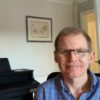
The purpose of my virtual Academy to continue to offer the guidance I have provided for over 20 years as a university professor of languages and literature, but now to participants from all over the world who want to continue the journey of lifelong learning.
The focus of the academy will be on weekly reading and discussion circles exclusively in the target languages. These circles provide the support you need to become an independent reader of literature in a foreign language. The regular meetings ensure that you form the habit of reading consistently, and in them you will gain cultural knowledge, conversational ability, and enriched vocabulary. Whether you have just finished teaching yourself a language or whether you studied it in the past and have now grown rusty, these circles can help you make the transition from intermediate to advanced.
The overall purpose of the academy is to take advantage of advances in technology that now permit people from all over the world to congregate together virtually. This ability represents a development that can and should revolutionize education, which has become too enshrined in degree programs for those primarily in their first decades of life, with institutions offering little in the way of continuing lifelong learning opportunities despite the fact that this is held out as an ideal.
The academy aims to remedy this by offering opportunities for adults to develop the ability to read literature in foreign languages at any stage of life, as well as support for learning languages in the first place, and for reading and discussing the Great Books of various civilizations in the kind of ongoing seminar environment in which they can be increasingly appreciated. This learning environment is designed to be suitable both for those who want to develop abilities in a single language or area, as well as to provide a foundation for those who might wish to develop more wide-ranging skills and understanding.
The Academy offers two kinds of subscription-based participation:
| Subscription Type | Price | Format | Description |
|---|---|---|---|
| Reading and Guided Study Circles | $150/month per circle | 12 weekly meetings per quarter | Guided reading circles in which participants digest, analyze, and enjoy culturally significant texts over the course of several months. |
| Live Learning sessions | $600 per quarter | 20 minutes a day, 5 days a week, for 3 months | Guided, active language-learning groups designed to help students work steadily through serious language-learning materials with structure, regularity, and accountability. These sessions are closer to an intellectual gym class than a regular lecture course. |
Both offerings operate on a quarterly basis:
1st Quarter: January, February, March
2nd Quarter: April, May, June
3rd Quarter: July, August, September
4th Quarter: October, November, December
Each quarter follows a 12-week structure, with a 1-week break either between or during quarters. The break will usually fall during the last week of the final month of a quarter unless unforeseen circumstances require it to be moved. If that happens, the change will be announced in the Schedule section. Please note that quarters may begin or end on the first or last days of adjacent calendar months.
As the Academy is based in the U.S., and a plurality of students reside there, we observe U.S. national holidays.
You are welcome to attend a circle or session as a guest before deciding whether this form of continuing adult education is for you, but participation in the Academy is based on an ongoing monthly subscription.